Which Hummingbirds Visit Your Yard? A Guide by Region
Standing at my kitchen window last spring, I watched a female Ruby-throated Hummingbird hover at the coral honeysuckle. She was the first arrival of the season here in East Texas, right on schedule for our area. But just a few hundred miles west, gardeners were already hosting their third or fourth species of the year.
Understanding hummingbird species by region transforms how you plan your garden and time your feeder placement. Each region hosts distinct species with different arrival dates, preferred flowers, and feeding behaviors. Some areas see just one species all season. Others become highways for multiple migrants.
Eastern United States: Ruby-throated Domain
The Ruby-throated Hummingbird rules the eastern half of North America, from southern Canada down to the Gulf Coast. In USDA zones 3-9, this species claims exclusive territory east of the Great Plains.
Males arrive first in spring, sometimes as early as March in zones 8-9, building to peak numbers by May in northern zones. The ruby throat patch appears black in most light, flashing brilliant red only when the sun hits it directly.
Females lack the red throat but share the same bright green back and white underparts. Both sexes measure about 3.75 inches long with a straight, needle-thin bill. Their wings beat 53 times per second, creating that distinctive hum.
Identifying Ruby-throated Hummingbirds
Watch for these key features:
- Straight black bill
- Bright emerald green back
- Males: ruby-red throat (gorget) that appears black in shadow
- Females: white throat with faint dark streaks
- Slightly forked tail
Ruby-throated hummingbirds prefer red tubular flowers but visit any nectar source. Cardinal flower, bee balm, and native honeysuckles rank among their favorites. They typically feed in early morning and late afternoon, avoiding the heat of midday.
Western Mountains and Plains: The Diverse Middle Ground
West of the 100th meridian, hummingbird diversity explodes. The Rocky Mountain region, spanning USDA zones 3-7, hosts at least three regular species plus occasional vagrants.
Black-chinned Hummingbird
The workhorse of the western mountains, Black-chinned Hummingbirds range from British Columbia to Mexico. Males wear a black throat bordered by an iridescent purple band that’s often hard to see. Females show the typical green-and-white pattern of most hummingbird species.
These adaptable birds thrive in diverse habitats from desert canyons to mountain meadows. They arrive in April at lower elevations, May in the mountains. Their wings beat slower than Ruby-throated Hummingbirds, creating a lower-pitched hum.
Broad-tailed Hummingbird
High-elevation specialists, Broad-tailed Hummingbirds summer in mountain meadows above 4,000 feet. Males produce a distinctive wing trill during flight, an unmistakable sound once you learn it. Their rose-red throat appears more orange-red than the Ruby-throated’s deeper ruby.
These birds time their arrival with snowmelt and wildflower blooms, often not appearing until May or June depending on elevation and snow conditions. They’re among the most cold-tolerant hummingbirds, sometimes foraging in near-freezing temperatures.
Calliope Hummingbird
North America’s smallest bird, Calliope Hummingbirds barely reach 3 inches long. Males sport distinctive streaked magenta throat feathers rather than a solid-colored gorget. Despite their tiny size, they migrate incredible distances, some traveling from Canada to Mexico.
Look for Calliope Hummingbirds in mountain forests and adjacent meadows. They prefer higher elevations than Black-chinned Hummingbirds but lower than most Broad-tailed territories, creating a vertical zonation in many mountain ranges.
Pacific Coast: Year-round Residents and Spectacular Migrants
California’s Mediterranean climate supports resident hummingbird populations year-round, supplemented by seasonal migrants. USDA zones 8-10 along the coast host the continent’s greatest hummingbird diversity.
Anna’s Hummingbird
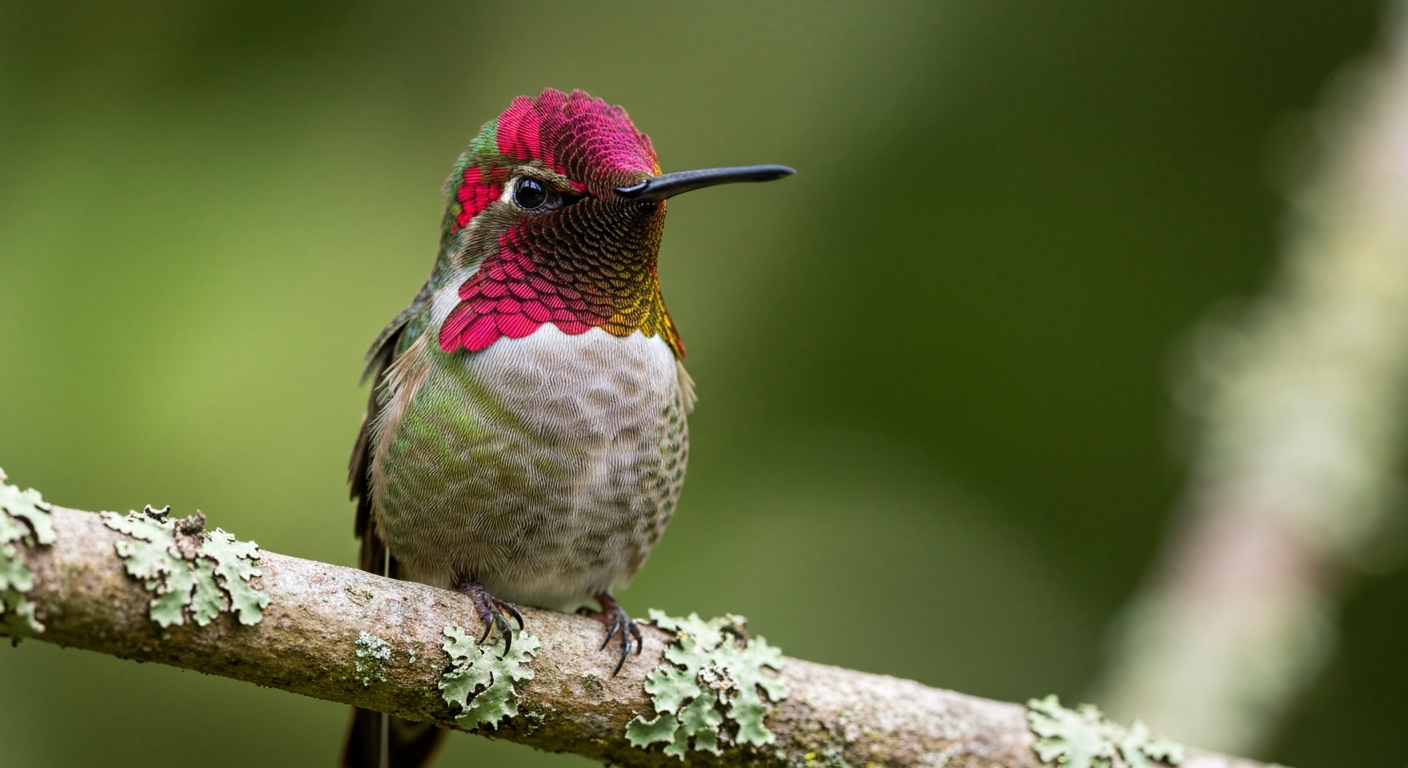
The Pacific Coast’s most common resident, Anna’s Hummingbirds don’t migrate. Males wear rose-red on both throat and crown, making them easy to identify. They’re larger and more robust than most hummingbirds, well-adapted to California’s varied habitats.
Anna’s Hummingbirds breed earlier than other North American species, sometimes nesting in December. Males perform spectacular diving displays, creating loud chirps with their tail feathers at the bottom of each dive.
Allen’s Hummingbird
Two subspecies complicate Allen’s Hummingbird identification. The migratory subspecies breeds along the coast from Oregon to Southern California, then winters in Mexico. The resident subspecies stays year-round on the Channel Islands and parts of coastal Southern California.
Males show orange-red throats and rufous sides and tails. Separating them from Rufous Hummingbirds requires careful attention to back color and tail patterns.
Rufous Hummingbird
Perhaps the most aggressive North American hummingbird, Rufous males defend territories fiercely. They’re also champion migrants, traveling up to 4,000 miles between Alaska and Mexico. Males show extensive rufous coloring on back, sides, and tail, with orange-red throats.
Peak migration through California occurs in late spring northbound and mid-summer southbound. Many western gardeners report their busiest feeder activity during Rufous migration periods.
Southwest Desert: Specialized Desert Dwellers
The Sonoran and Chihuahuan deserts, spanning USDA zones 8-10, support specialized hummingbird species adapted to extreme heat and seasonal rainfall patterns.
Broad-billed Hummingbird
A Mexican species that barely reaches Arizona and New Mexico, Broad-billed Hummingbirds prefer streamside vegetation in desert mountains. Males show brilliant blue throats and bright red bills with black tips. The broad, slightly curved bill distinguishes them from other southwestern species.
These birds time their breeding with summer monsoons, when desert wildflowers and insects peak. Look for them near water sources in desert canyons and riparian areas.
Violet-crowned Hummingbird
The most distinctive southwestern species, Violet-crowned Hummingbirds show pure white underparts and violet-blue crowns on both sexes. Their straight red bills and snow-white bellies make identification straightforward.
Found mainly in Arizona’s sky islands and adjacent Mexico, they prefer sycamore groves and pine-oak forests above the desert floor. Summer residents typically arrive in April and depart by September.
Regional Timing and Garden Planning
Understanding arrival and departure patterns helps optimize your hummingbird habitat. Ruby-throated Hummingbirds in the East follow a predictable schedule: males arrive 7-10 days before females, peak numbers occur during nesting season, and most depart by September.
Western regions see more complex patterns. Mountain species arrive later and leave earlier than desert or coastal birds. Pacific Coast residents like Anna’s Hummingbirds stay year-round but may be joined by migrants during peak seasons.
Plant succession matters for sustained nectar sources. Early bloomers like currant and gooseberry feed arriving migrants. Summer natives like bee balm and cardinal flower support breeding birds. Late-season flowers like jewelweed and cardinal climber fuel fall migration.
Creating Regional Habitat
Each region benefits from different native plant combinations. Eastern gardens excel with cardinal flower, wild columbine, and native azaleas. Western mountain gardens need penstemons, salvias, and native honeysuckles. Pacific gardens thrive with fuchsias, sages, and manzanitas.
Desert gardens require different strategies entirely. Chuparosa, desert willow, and ocotillo provide natural nectar sources adapted to extreme conditions. Supplemental feeders become more critical where natural flowers may be scarce.
The diversity across regions means no single approach works everywhere. But understanding your local species opens possibilities for creating habitat that serves your specific hummingbird neighbors. Whether you host one species or eight, knowing their needs makes all the difference.
Our nectar mix works for every hummingbird species — formulated to match what they find in native wildflowers.
Next Batch Waitlist →